Want to cook restaurant-quality salmon at home? It’s actually not that complex with the right salmon! This article will introduce you to a variety of salmon products, as well as food pairing and sauce ideas that you can easily incorporate to your home kitchen.
Choosing the Right Salmon
Grocery stores offer a wide variety of salmon that are not just limited to a fresh salmon fillet where examples include frozen salmon and smoked salmon. Therefore, choosing the right salmon for each dish will not only make it more delicious but also much easier to prepare!

- Fresh Salmon
- Choose a salmon that is naturally and evenly orange or pink in color without any dark discoloration or bruises.
- When lightly pressed, the flesh should bounce back rather than become deformed or lose its shape, nor should it have a mucus-like texture on its skin.
- The salmon skin should look glossy, not dry and rough.
- The salmon should not have an intense fishy smell.
- Frozen Salmon
- The salmon must be tightly vacuum-sealed
- Check the freezing date and expiration date indicated on the packaging.
- If you notice dry, white patches on the surface of the salmon flesh, this may indicate salmon that has been frozen for too long or thawed and refrozen, which can affect its quality.
- Smoked Salmon
- Choose smoked salmon with an even, consistent color, avoiding any that look overly pale or unnaturally bright red, as this may indicate the use of artificial coloring.
- Smoked salmon should be consumed within 2-3 days after opening.
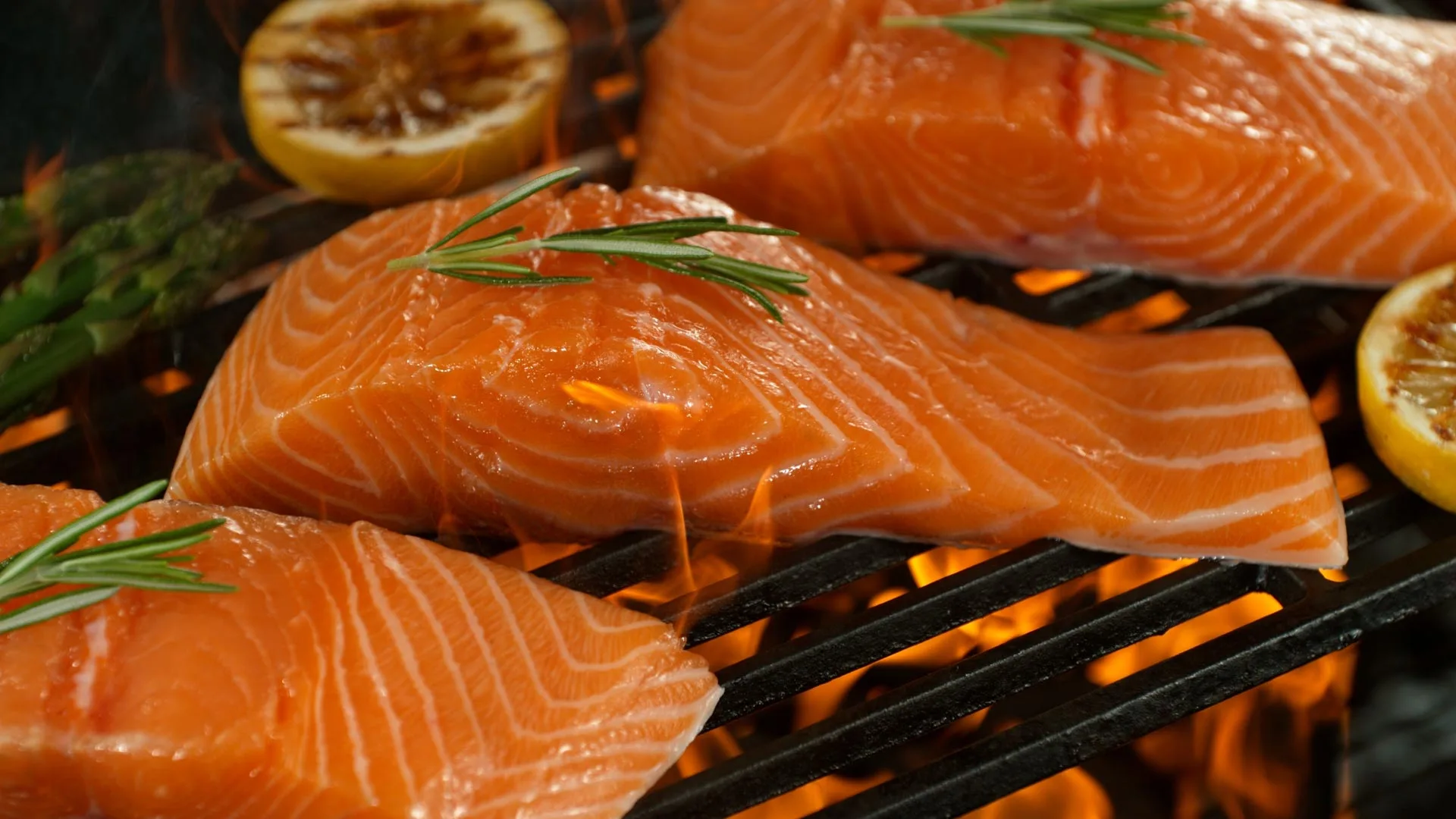
5 Tips for Grilling Frozen Salmon to Perfection: Tender, Juicy, and Crispy-Skinned
- Thaw Properly: Thaw frozen salmon in the refrigerator for 8-12 hours for small portions or standard fillets (up to 170 g). Larger, thicker cuts, or a whole salmon may require 24 hours or more to thaw prior to cooking. It is recommended to place the fish in a sealed container or on a tray to catch any thawing liquid. This method allows the fish to thaw evenly and helps preserve its texture rather than leaving it to thaw at room temperature. Avoid using hot water or leaving fish outside the refrigerator for extended periods of time.
- Pat Dry Before Seasoning: After the salmon has been thawed, gently pat the surface of the salmon dry with paper towels, particularly on the skin side. Excess moisture can make it difficult to achieve a crispy skin and may also cause oil to splatter while grilling. This step is one of the key secrets to grilling salmon with crispy skin.
- Season the Salmon Properly: Salmon already has a naturally rich, buttery flavor, so there is no need for heavy seasoning. Simply season with salt and pepper to start, then add extra aroma with herbs, garlic, lemon, or your favorite spices. For sauces containing sugar or honey, season towards the end of cooking to prevent the sauce burning while grilling.
- Control the Heat and Cooking Time: Preheat the pan before grilling the salmon. Cook over medium to medium-low heat so the salmon cooks gradually without the exterior browning too quickly. For crispy skin, start with the skin side down and make sure the salmon skin is fully in contact with the pan. Avoid flipping the salmon too often, as this can cause the flesh to break apart leading to lost moisture. Cooking time will depend on the thickness of the salmon and the equipment used, so use its color and texture as the main indicators.
- Let the Salmon Rest: When the salmon is cooked to your desired doneness, remove it from the heat and let it rest briefly before serving. Resting allows the heat to distribute more evenly and helps retain moisture within the fish, resulting in a more tender and juicy texture rather than cutting into the salmon immediately.
What Makes Grilled Salmon Delicious?Salmon that has been grilled well should have a beautifully browned exterior and crispy skin, with tender, juicy flesh that is not dry or tough. It should have a pleasant aroma without any unusual or unpleasant odor. The ideal level of doneness depends on personal preference and food safety considerations. For salmon intended to be fully cooked, make sure it reaches a safe internal temperature. What to Avoid When Grilling Frozen Salmon
|

From Frozen Salmon to a Delicious Dinner: What is Salmon Best Paired With?
- For a Healthy and Light Option: Grill and serve salmon with grilled vegetables such as broccoli, asparagus and zucchini. For an addition of carbohydrates, opt for baked sweet potato or brown rice, and top with a drizzle of lemon dressing or olive oil for a satisfying yet light dinner.
- For a Japanese-Inspired Meal: Give ordinary grilled salmon a Japanese twist with Teriyaki or Miso sauce. Serve with Japanese rice, a sprinkle of sesame seeds, and serve with edamame or pickled vegetables for a balanced meal that packs a variety of flavors.
- For a Western-Style Dinner: Serve salmon with mashed or roasted potatoes, alongside a fresh salad with lemon butter Sauce or a creamy dill sauce. This pairing is perfect for turning an ordinary dinner into something a little more special without any complicated cooking steps.
- For an Easy Dinner: For a quick and easy meal, simply grill the salmon and serve it with mixed salad greens, avocado, cherry tomatoes, and sourdough or baguette on the side. With just a few ingredients, you can create a nutritiously balanced and appetizing dinner with minimal effort.
Want to transform ordinary meals into a special salmon dish at home? Start by choosing quality salmon to suit the dish you plan to make, along with your favorite sauce and sides, all available at Villa Market both in-store and online. Enjoy convenient one-stop shopping for everything you need to create delicious meals at home, delivered right to your doorstep today!